
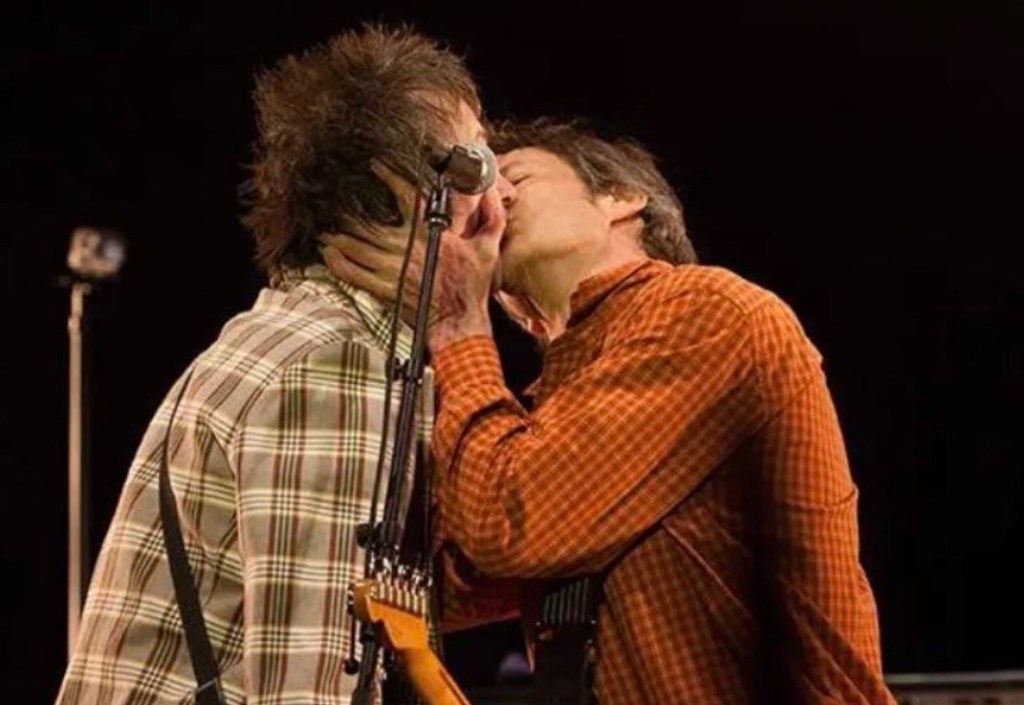
By Robin Green. Photo by David Tanner
When I was a kid, my dad told me with way too much seriousness that the Beatles wrote the best love songs. He told me this with the same sense of gravity a parent might use when telling their child not to stick forks into toasters or explaining the correct way to tie your shoes. He used the same delivery when George Harrison died; two situations that I, an eight year old, didn’t really care about at the time. I think I said “Oh. okay.” to both.
As an adult, I would like to raise him a counterargument: The Replacements wrote the best love songs. My dad’s opinion was surely tied to being someone who grew up with the Beatles, experiencing their love songs in the same way my peers and I grew up around the pop punk of the 2000s. If I was a better millennial, I might claim that some mid-aughts radio band wrote the best love songs. If I was a better music listener, I would probably have a dozen or so other contenders lined up, so please take this statement with a grain of salt.
Unlike my dad and the Beatles, I did not grow up hearing Minneapolis natives The Replacements in any capacity. 1984’s Let It Be was released a decade before I was born, and my parents never brought their music into our household. Though my parents were boomers, they lived in the wrong parts of the U.S. and were oblivious during the band’s peak years. (My mom was living in the Midwest in the eighties and in Seattle in the nineties and never engaged with either prominent music scene, but I’ll forgive her.)
Not every “love song” by The Replacements is a love song in the traditional sense. Famous for their drunken gigs and near-demise as much as their contributions to rock music in the 20th century, many of their songs were about cocaine, suicide, oral surgeries gone wrong, degeneracy, working class life and drinking. There’s a song on their debut album where singer Paul Westerberg yells “BUS STOP” over and over, another titled “Fuck School”; but as much as they wrote about their time languishing in the gutter, they wrote about love. Sometimes oversimplified, sometimes goofy and often gut-wrenching, they covered it all: fleeting crushes, heartbreak, longing, alienation, love for your idols and the particular brand of stagnant loneliness that comes with missing loved ones while away on tour.
Unlike other faves that have stuck with me since middle school, I wasn’t introduced to the band until I was in my twenties. I’d heard the Joan Jett cover of “Androgynous” in high school, and didn’t realize it was a cover until a friend played the original for me years later. One of the band’s more well known and often covered songs, it’s a sweet and tender affirmation of love between two people who forgo typical gender presentation. As a then-gay teenager, I associated it with the excitement that experimentation brought. It seemed perfectly natural that Joan Jett, in all her butch, gay-awakening glory, would have written it, or so I thought. For many others, it’s aged into a retrospective anthem for trans people in love, a sonic hug decades ahead of its time.
Replacements songs tend to be like that. They’re often sad or absurd before anything else, a blip of tenderness, love songs only if you squint. There are more overt examples, of course; their 1981 debut Sorry Ma, Forgot To Take Out The Trash contains several of the jumbled, desperate youthful love variety. “Customer” is an abrasive yet endearing track with a sympathetic premise, as explained in its spoken intro: “I’m in love with the girl who works at the store, but I’m nothing but a customer”, to which I say: yeah, dude, that sounds like it sucks. “I’m In Trouble” follows their song formula to a tee: Pining? Listless boredom? Mentions of killing yourself, this time to escape unwanted love? All there, in just over two minutes. “Kiss Me On The Bus” also falls into the fast and sweet category, another track about being infatuated with a stranger.
In the same careful, sentimental vein as “Androgynous”, we have “Sixteen Blue”. While more about a lack of romance than anything else, it made the cut because of the love it provides to the lonely teenager in all of us. It lends no reassurance yet captures the pitfalls of being young, from the lyrics “now you’re wondering to yourself if you might be gay”, “tell your pa you got a date/but you’re lyin’” to the shout in the middle of the track of “you don’t understand anything sexual/I don’t understand”. The song ends slowly, and Westerberg’s “…you’re mine, if you want to” can barely be made out over the fading notes.
“Can’t Hardly Wait,”, “Left of the Dial”, and “Answering Machine” all fall into the same category. The song genre that is “I’m on tour and I miss my wife/partner/sanity/house/stability/friends/dog” is nothing new, but The Replacements have a knack for capturing that lost-in-space feeling and turning it into something universal. The words “how do you say you’re okay to an answering machine/how do you say goodnight to an answering machine?” separate themselves from the touring musician’s anthem and become something more widely felt. “Valentine” needs to be mentioned, because a love song wouldn’t be by The Replacements if it didn’t go, “if you were a pill, I’d take a handful at my will/and I’d knock you back with something sweet and strong”.
I had already heard the band’s 1985 hit “Swingin’ Party” a dozen times when I made an unfortunate realization: the beat closely resembles that of Neil Young’s “Harvest Moon”- or, for the sake of accuracy, Neil’s song resembles “Swingin’ Party”. I think I tweeted about this at the time, probably alongside this image of a kid upside down on a swing with their hair in a puddle. The sentiment was, “Can this already devastating song get any worse? Must I now associate it with Neil Young, too?” It is, again, one of the band’s more popular songs. For those not in the know, it also closely follows their songwriting formula, but the message is clear in the chorus: if being afraid is a crime, we hang side by side. The Replacements are doing what they do best and writing about what they know: partying, moral gray areas, and bittersweet connection.
Robin Green is a millennial, but has the music taste of a 47 year old man. She was born and raised in the Pacific Northwest, but for the sake of this article, is half Midwestern on her mother’s side. You can find her online here and here.


 earshotmag.com

Leave a reply to Sukon Bouffadees Cancel reply